


Course Description
Advances in
real‐time graphics research and the increasing power of mainstream GPUs have
resulted in an explosion of innovative algorithms suitable for rendering
complex virtual worlds at interactive rates. Every year the latest video games
display a vast variety of sophisticated algorithms resulting in ground‐breaking
3D graphics that push the visual boundaries of interactive
experience.
This course will cover several topics ranging from the best practices
and techniques prevalent in current state‐of‐the‐art
rendering in many award‐winning games all the way up to innovative 3D
rendering research that will be found in the games of tomorrow. This will
include examples from recent games from Crytek, Rare, Bungie as well as
upcoming titles from Blizzard Entertainment, and graphics research from AMD’s
Game Computing Applications Group.
Previous years’ Advances course slides: go here
Syllabus
Welcome and Introduction to Advances in Real-Time Rendering
in 3D Graphics and Games
Natalya
Tatarchuk (AMD)
Lighting and Material of Halo 3
Hao
Chen (Bungie)
Advanced Virtual Texture Topics
Martin Mittring (Crytek)
March of the Froblins: Simulation
and Rendering Massive Crowds of Intelligent and Detailed Creatures on GPU
Jeremy
Shopf (AMD)
Joshua Barczak (AMD)
Christopher Oat (AMD)
Natalya Tatarchuk (AMD)
Using Wavelets with Current and Future Hardware
Michael Boulton (Rare)
Rendering Techniques From StarCraft
II
Dominic
Filion (Blizzard Entertainment)
Rob McNaughton (Blizzard Entertainment)
Prerequisites
This
course assumes working knowledge of a modern real‐time graphics API like
OpenGL or Direct3D, as well as a solid basis in commonly used graphics
algorithms. The participants are also assumed to be familiar with the concepts
of programmable shading and shading languages.
Intended Audience
Technical
practitioners and developers of graphics engines for visualization, games, or
effects rendering who are interested in interactive rendering.
Course Organizer
Natalya Tatarchuk is a graphics software architect and a
project lead in the Game Computing Application Group at AMD Graphics Products
Group (Office of the CTO). There she pushes parallel computing boundaries
investigating innovative real‐time graphics techniques. In the past she
has been the lead of ATI’s demo team creating the state‐of‐the‐art
interactive renderings and has been the lead for the tools group at ATI
Research. Prior to that Natalya worked on 3D modeling software, and scientific
and financial visualization, among other projects. She has published papers and
articles at various computer graphics conferences and technical book series,
and has presented her work at graphics and game developer conferences worldwide
Talks
Lighting and Material of Halo 3
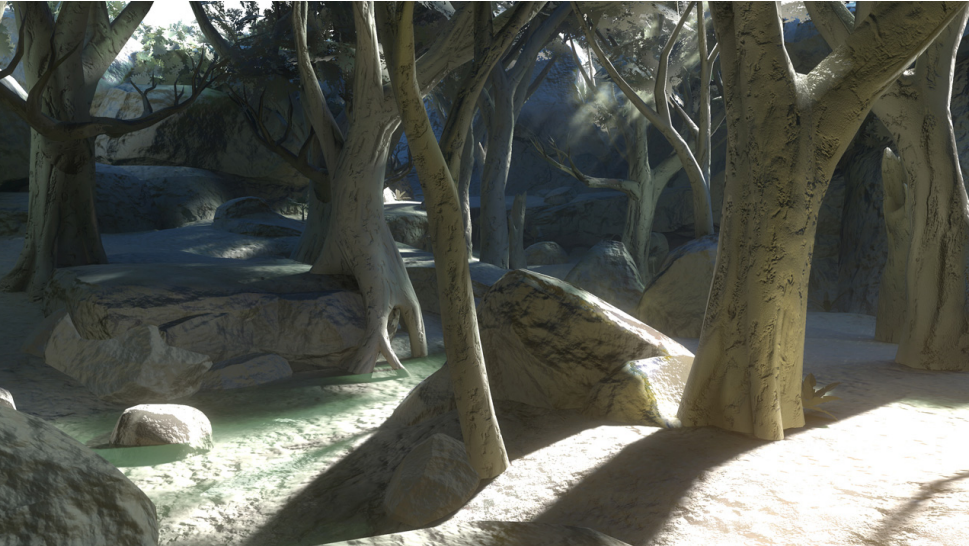
Abstract:
Lighting and
material are very important aspects of the visual appearances
of games and they present some of the hardest
challenges in real time graphics today. For Halo and indeed
many other games, keeping the players immersed in the virtual environment for
long periods of time is a top priority of the graphics system, and good quality
lighting and realistic materials are the fundamental building blocks for achieving
the level of realism necessary to accomplish this goal.
Speaker Bio:
Hao Chen is the graphics architect and one of the
engineering lead for Bungie Studio, where he currently
leads the research and development of Bungie’s next generation graphics engine.
He was the graphics engineering lead of Halo3. Prior to that, Hao has
worked on numerous game titles for Microsoft and Bungie on the Xbox and PC
platforms, including Outwars, AMPED1, AMPED2,
and Halo2.
Xinguo Liu is a professor of the Computer Science School at Zhejiang University. His
research interests include geometry processing, appearance modeling, real‐time
rendering, and deformable objects. He received a B.Sc. in 1995 and a Ph.D. in
2001 from Zhejiang University. He was a researcher at the Internet Graphics
Group of Microsoft Research Asia from 2001 to 2006, and he was a visiting
researcher at CMU Graphics Lab in 2007.
Materials: Full Course
Notes (39 MB), Chapter 1
https://doi.org/10.1145/1404435.1404437
Advanced
Virtual Texture Topics
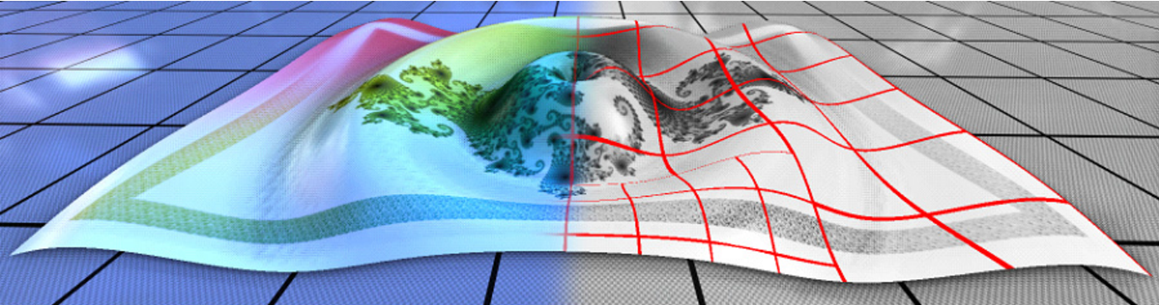
Abstract:
A virtual
texture is a mip-mapped texture used as cache
to allow a much higher resolution texture to be emulated for real-time
rendering, while only partly residing in texture memory. This functionality is
already accessible with the efficient pixel shader capabilities available on
the recent generations of commodity GPUs. In this chapter we will be discussing
technical implications on engine design due to virtual textures use, content
creation issues, results, performance and image quality. We will also cover
several practical examples to highlight the challenges and to offer solutions.
These include texture filtering, block compression, float precision, disk
streaming, UV borders, mip-map generation, LOD
selection and more.
Speaker Bio:
Martin Mittring, Lead Graphics
Programmer, Crytek GmbH. Martin is a software engineer and member of the
R&D staff at Crytek. Martin started his first experiments early with text‐based computers, which led to a passion for
computers and graphics in particular. He studied
computer science and worked in one other German games company before he joined
Crytek. During the development of Far Cry he was working on improving the PolybumpTM tools and became lead network programmer for
that game. His passion for graphics brought him back to former path and so he
became lead graphics programmer in R&D. Currently he is busy working on the
next iteration of the engine to keep pushing future PC and next‐gen
console technology.
Materials: Full Course
Notes (39 MB), Chapter
2
https://doi.org/10.1145/1404435.1404438
March
of the Froblins: Simulation and Rendering Massive
Crowds of Intelligent and Detailed Creatures on GPU
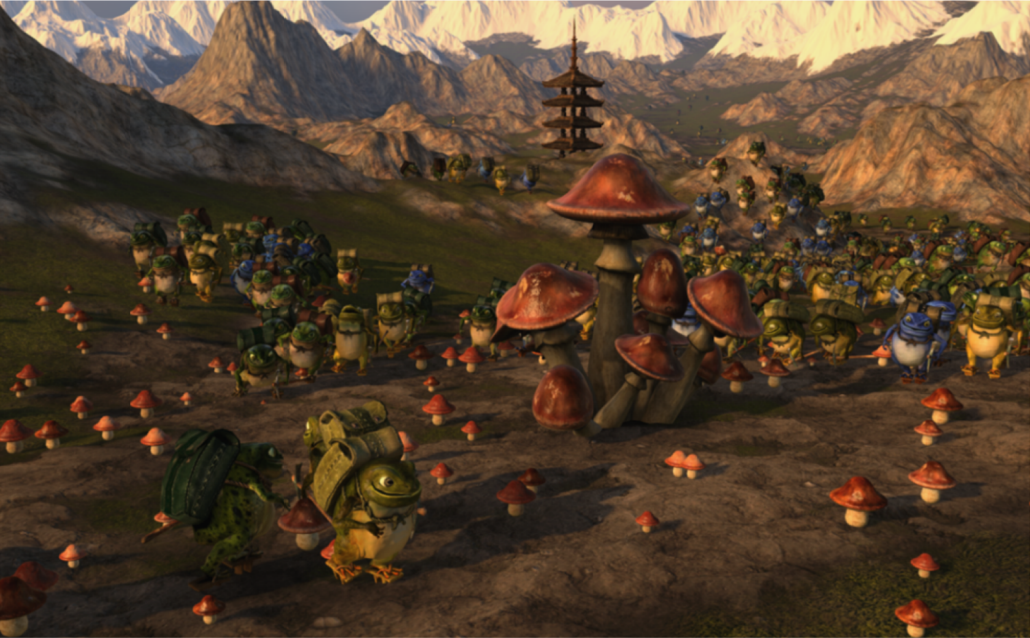
Abstract:
Artificial
intelligence (AI) is generally considered to be one of the key components of a
computer game. Sometimes when we play a game, we may wish that the computer
opponents were written better. At those times while playing against the
computer, we feel that the game is unbalanced. Perhaps the computer player has
been given different set of rules, or uses the same
rules, but has more resources (health, weapons, etc.). The complexity of
underlying AI systems, along with game design, belies the resulting feeling we
have when playing any game. As CPU and GPU speed and power continues
to grow, along with increasing memory amounts and bandwidth, game developers
are constantly improving the graphics of their games. In the last five years
the production quality of games has been increasing (along with the
corresponding budgets). Recent games woo players with incredible breakthroughs
in real- time 3D graphics, complexity of the worlds and characters, as well as
various post-processing effects. And while there had been
tremendous improvements for parallelizing rendering through the evolution of
consumer GPU pipelines, artificial intelligence computations are treading
behind. To date, there had been rather few attempts at
parallelizing AI computations.
Speakers Bios:
Jeremy Shopf is a senior
software engineer in the Game Computing Application Group at AMD Graphics
Products Group, where he works on graphics demos and novel rendering techniques
as part of the demo team. Prior to working at AMD, Jeremy was a graduate
student researching perceptually driven rendering techniques as a member of the
VANGOGH research lab at the University of Maryland Baltimore County.
Joshua Barczak is a graphics engineer at AMD specializing in real-time
rendering, GPU-accelerated crowd simulation, and geometry processing. Around
2008, he contributed to AMD’s March of the Froblins
demo—showcasing thousands of animated creatures simulated and rendered entirely
on the GPU—and presented the work at the SIGGRAPH Advances in Real-Time
Rendering course. His earlier research includes optimizing vertex locality
with fast triangle reordering (SIGGRAPH 2007) and advancing texture and
compression techniques for interactive graphics.(joshbarczak.com)
Christopher Oat, MTS, AMD. Christopher Oat is a member of
AMD's Game Computing Applications Group (Office of the CTO) where he is a
technical project lead working on state‐of‐the art
demos. In this role, he focuses on the development of cutting‐edge
rendering techniques for the latest graphics platforms. Christopher has
published his work in various books and journals and has presented his work at
graphics and game developer conferences around the world.
Natalya Tatarchuk, Graphics SW Architect, AMD. Natalya is a
graphics software architect and a project lead in the Game Computing
Application Group at AMD Graphics Products Group (Office of the CTO). There she
pushes parallel computing boundaries investigating innovative real‐time
graphics techniques. In the past she has been the lead of ATI’s demo team
creating the state‐of‐the‐art interactive renderings and has
been the lead for the tools group at ATI Research. Prior to that Natalya worked
on 3D modeling software, and scientific and financial visualization, among
other projects. She has published papers and articles in
various computer graphics conferences and technical book series and has
presented her work at graphics and game developer conferences worldwide.
Materials: Full Course
Notes (39 MB), Chapter
3
https://dl.acm.org/doi/10.1145/1404435.1404439
Using
Wavelets with Current and Future Hardware

Abstract:
Much of the
data we wish to encode over a surface (such as lighting data) is not
homogeneous in complexity and is becoming less homogeneous as we pursue higher
graphical fidelity.
Speaker Bio:
Michael has worked at Rare/MGS for over five years
and is currently a senior software engineer. He wrote the graphics engine for
VIVA PINATA on the Xbox360 and has given previous presentations at both GDC and
ACM SIGGRAPH. Currently, he works in the shared technology department at Rare,
developing technology for current and future hardware.
Materials: Full Course
Notes (39 MB), Chapter
4
https://doi.org/10.1145/1404435.1404440
Rendering
Techniques from StarCraft II
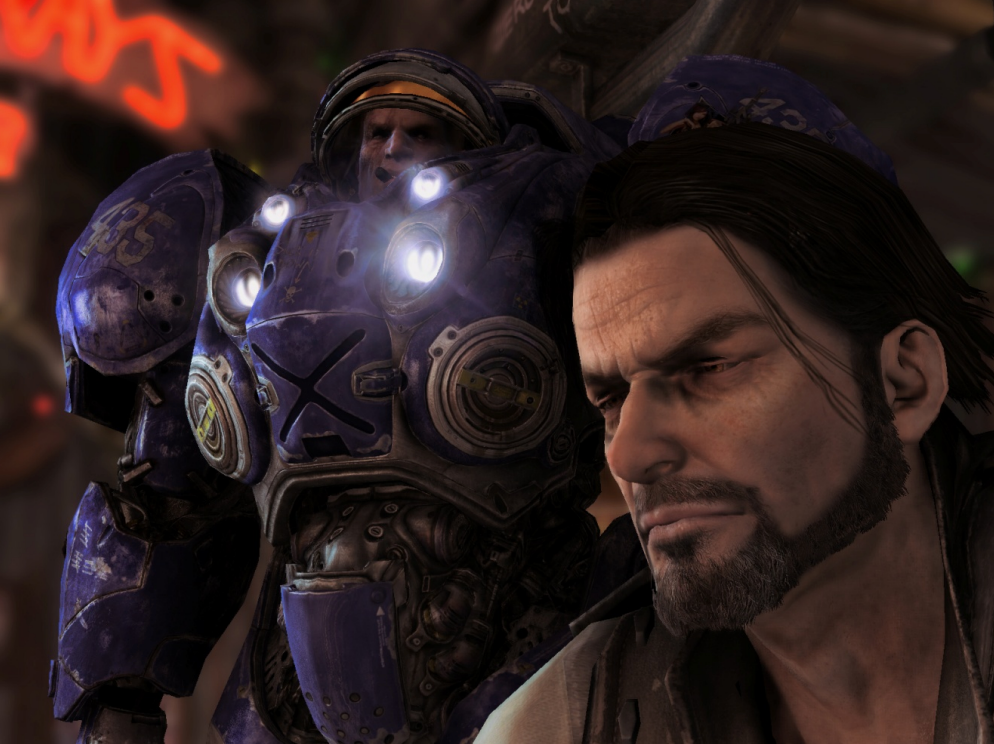
Abstract:
In this chapter
we present the techniques and algorithms used for compelling storytelling in
the context of the StarCraft II© real-time strategy game. We will
go over some of the design goals for the technology used to empower our artists
for both in- game and "story mode"
settings as well as describe how the Blizzard art style influenced the design
of the engine. Various aspects of our lighting pipeline will be unveiled, with
a strong focus on several techniques making use of deferred buffers for depth, normals, and coloring components. We will show how these
deferred buffers were used to implement a variety of effects such as deferred
lighting, screen-space ambient occlusion and depth of field effects. Approaches
with respect to shadows will also be discussed.
Speakers Bios:
Dominic Filion, Senior Software Engineer, Blizzard
Entertainment Dominic is currently a senior software engineer at Blizzard
Entertainment, where he has been hard at work on the upcoming Starcraft II for the past few years. He has
worked for close to a decade in the games industry, acting as technical
director or principal architect on three different commercial 3D engines at
several game companies prior. On the rare moments where he is not obsessing about improving Starcraft
II’s graphics, Dominic would enjoy feedback on the material presented here,
so feel free to drop him a note!
Rob McNaughton, 3D Animator and Digital Effects artist,
Blizzard Entertainment Rob McNaughton is a Southern California native bent on
playing games for a living. That works out since he has been
employed at Blizzard Entertainment for over 12 years. Rob currently
is Lead Technical Artist for Blizzard’s Team 1, and has worked on the following
games for them: StarCraft II (When it is ready), World of
Warcraft: The Burning Crusade (2007), World of Warcraft (2004), WarCraft III: The Frozen Throne (2003), Warcraft
III: Reign of Chaos (2002), StarCraft (1998), StarCraft: Brood
War (1998), Diablo (1996). Rob is primarily a 3D Animator and
Digital Effects artist but has done his time at many art tasks including pencil
sketching and digital painting. Digital speed painting has become a
favorite new work medium brought on with help of conceptart.org.
Materials: Full Course
Notes (39 MB), Chapter 5
https://doi.org/10.1145/1404435.1404441
Direct contact:
